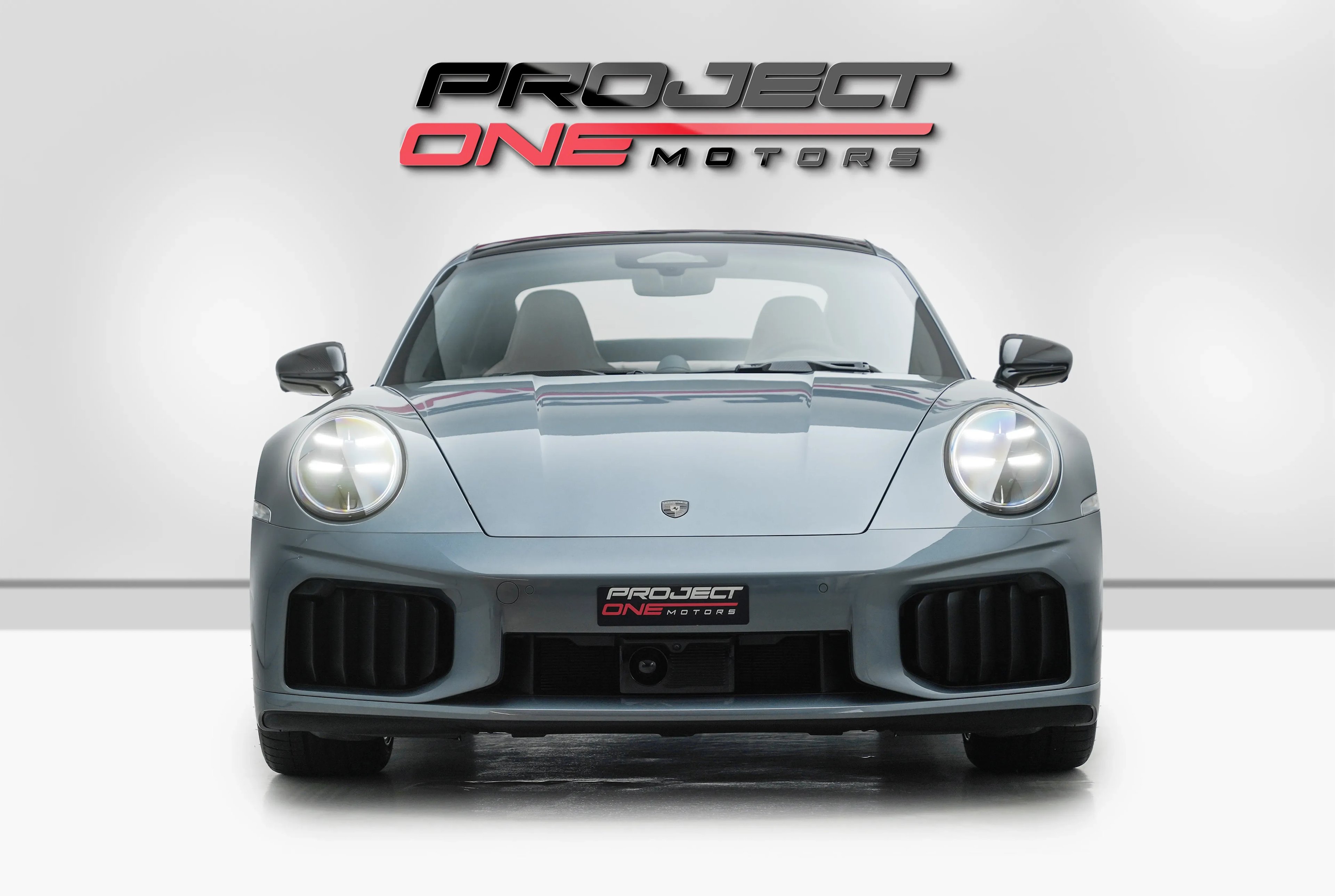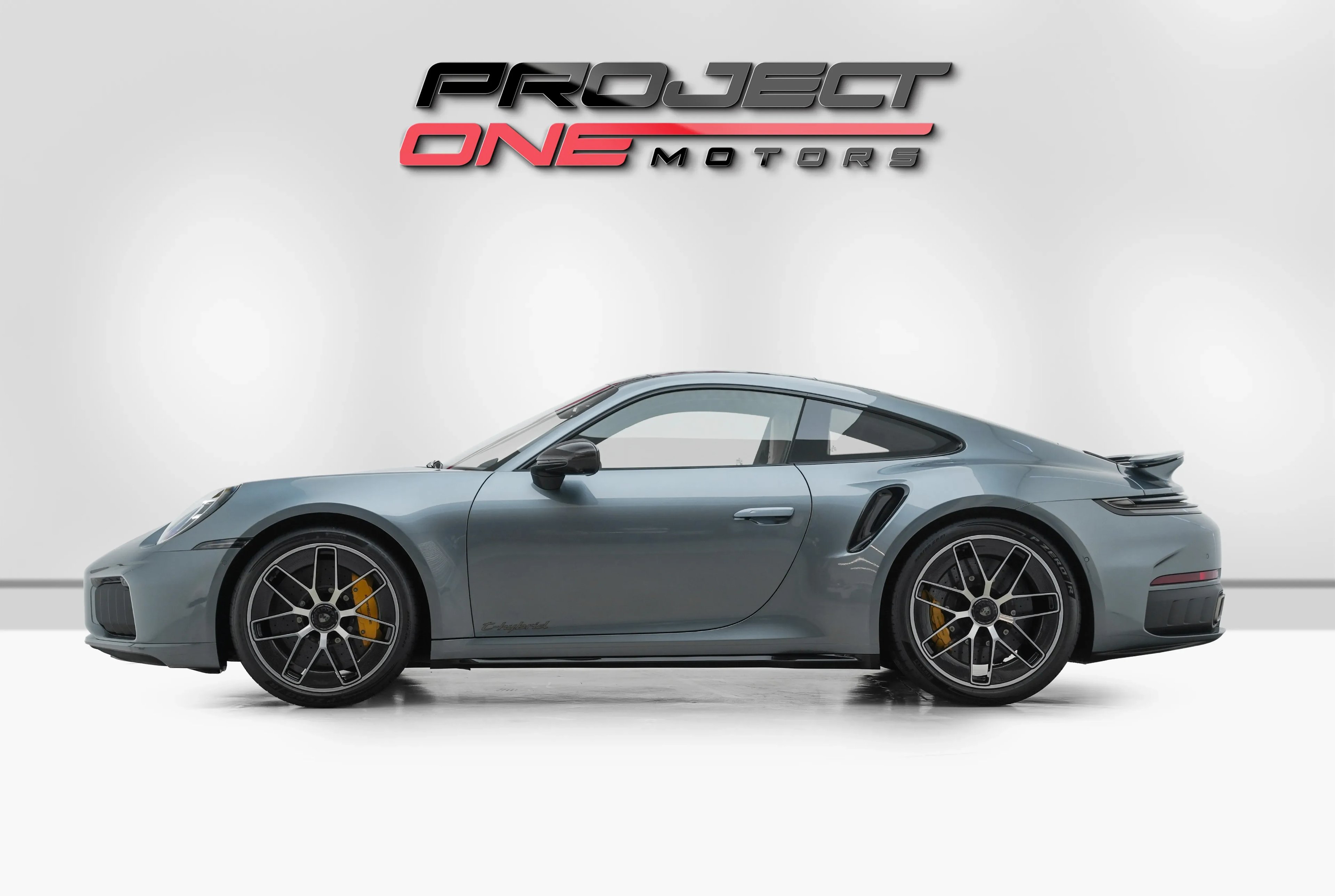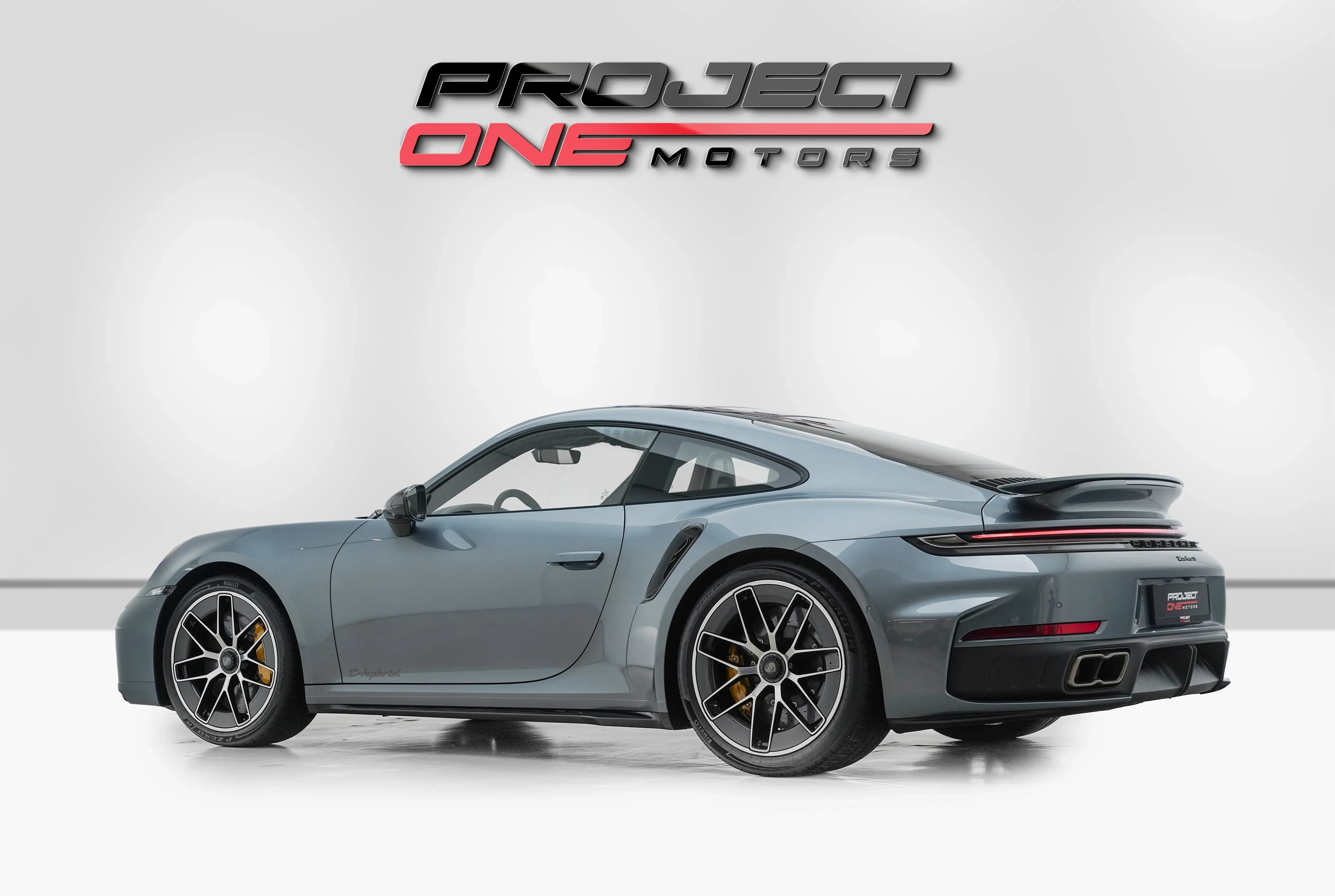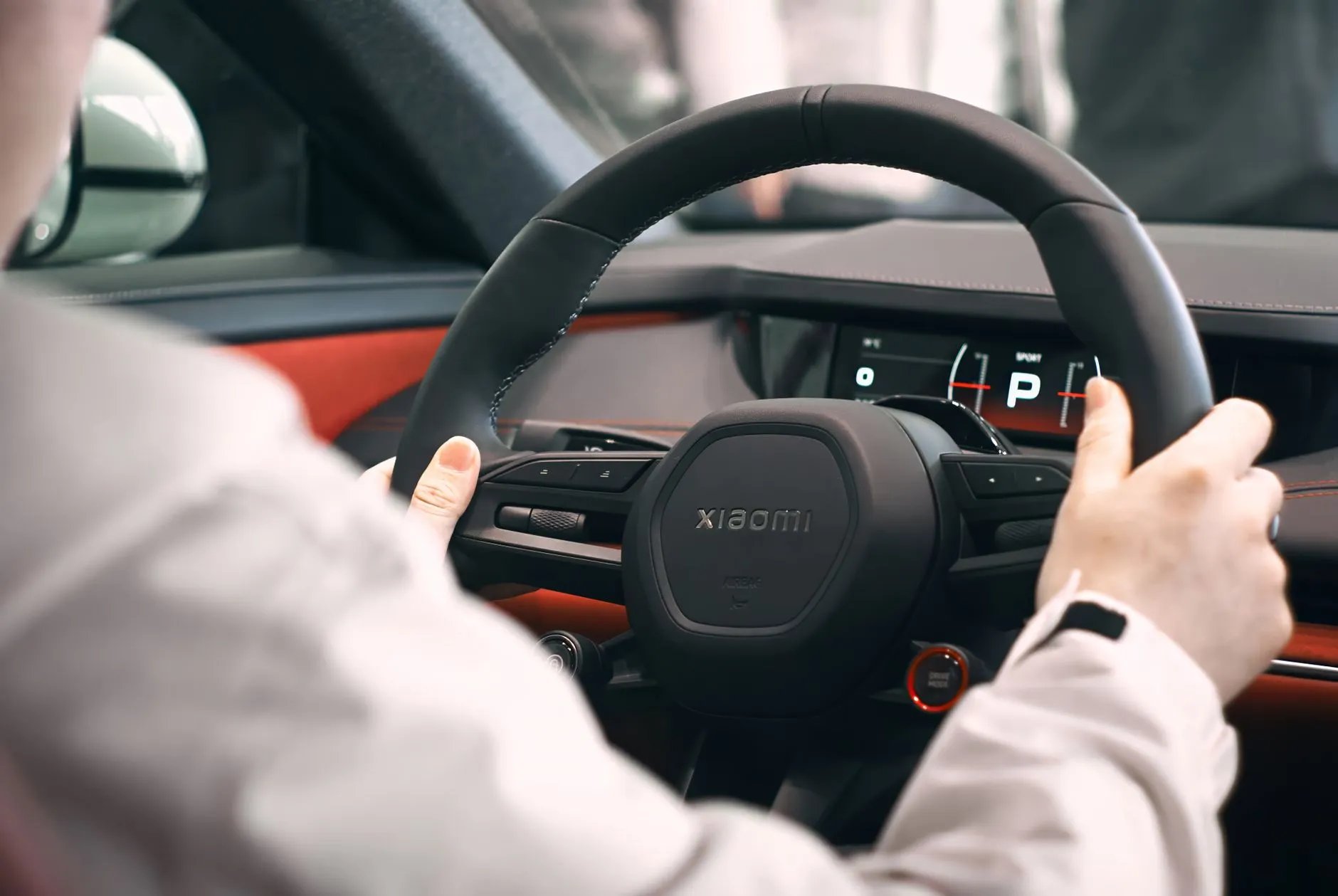
Photo by Felix Maltz on Pexels
Xiaomi's SU7 saloon and YU7 SUV have taken China by storm, but what does that mean for UAE buyers in 2026? From grey-import risks and DEWA charging costs to HyperOS cabin tech and Dubai summer heat realities, here is every concrete detail you need before considering either model.
Can you get a Xiaomi YU7 in Dubai, and what does a phone maker's EV really offer? This guide covers the Xiaomi SU7 and YU7 in the UAE and what to know before you buy.
A phone brand selling a 673 hp electric saloon is not a gimmick — it is a calculated move that has produced one of the most talked-about cars of 2026. Xiaomi's SU7 racked up over 100,000 orders in its first year of production, and the larger YU7 SUV is now following the same trajectory. Yet on Dubai dealer floors, neither car exists through any official channel. That gap between global buzz and local reality is exactly what UAE buyers need to understand before making any decisions.
This article covers both models in full: the SU7 saloon in Standard, Pro, Max, and Ultra trims; and the YU7 SUV in its launch configurations. It examines what the HyperOS-powered cabin actually delivers, how charging economics work against DEWA and ADDC tariffs, and what the grey-import route genuinely costs a buyer in the UAE once insurance, parts, and registration reality sets in.
No official Xiaomi Automotive distribution has been announced for the UAE as of July 2026. Every Xiaomi EV currently in the country arrived via grey import. That single fact shapes every paragraph that follows.
The Xiaomi SU7 is a four-door, fastback electric saloon built on a proprietary platform that Xiaomi calls the Modena architecture. It competes dimensionally against the Porsche Taycan and Tesla Model S. Four trims exist: Standard (299 hp, single rear motor), Pro (299 hp with a larger battery), Max (673 hp, dual motor), and Ultra (over 1,000 hp, tri-motor, track-focused). The Standard uses a 73.6 kWh battery; the Max uses a 101 kWh unit. The SU7 Max claims a 0-100 km/h time of 2.78 seconds and a top speed of 265 km/h.
The Xiaomi YU7 is a mid-size SUV sharing SU7 underpinnings but raised, with a longer wheelbase for rear-seat priority. It launches in Standard (single motor, 310 hp) and Pro/Max dual-motor variants. The YU7 Max produces 679 hp with a claimed 0-100 time of 3.23 seconds. Battery options mirror the SU7: 96.3 kWh on Standard/Pro and 101 kWh on Max. Both models support 800V architecture, enabling the fast-charging speeds discussed below.
In China, SU7 pricing starts at RMB 215,900 for the Standard and rises to RMB 529,900 for the Ultra. YU7 pricing starts at RMB 253,500. Converting at mid-2026 rates, the SU7 Standard is roughly equivalent to AED 109,000 before any import costs. Those figures are irrelevant to UAE buyers, however, because landing a grey-import unit through a broker adds customs duty, freight, local modifications, and margin — all of which are addressed in the grey-import section below. Prices accurate as of July 2026.
Xiaomi's biggest differentiator is not horsepower — it is software. The HyperOS infotainment system runs on a 16.1-inch central screen with a resolution of 3K and a secondary 7.1-inch driver display. The operating system is the same HyperOS that powers Xiaomi smartphones, which means native cross-device integration with Xiaomi phones, tablets, and wearables. For a buyer already in Xiaomi's ecosystem, the handoff between phone and car is genuinely seamless: phone calls, Xiaomi Watch health data, and app mirroring all transfer without a cable.
Apple CarPlay and Android Auto are not supported natively — Xiaomi's strategy is to retain users within HyperOS. The cabin also features a 25-speaker Xiaomi-developed audio system, a head-up display with augmented reality lane guidance, and an in-car 5G hotspot. The SU7 Ultra adds a physical button cluster on the steering wheel that mirrors the layout of a Xiaomi game controller, a detail that signals exactly who Xiaomi is targeting.
A practical concern for UAE buyers: HyperOS as shipped from China is calibrated for Chinese mapping services (Baidu Maps, Amap). Third-party navigation apps can be sideloaded, but Google Maps integration is not factory-standard. Grey-import resellers in the UAE sometimes flash modified firmware, which voids the original software warranty and can introduce instability. This is not a dealbreaker, but it is a real inconvenience compared with buying a Tesla from Carzle listings that ships with an internationally supported navigation stack.
Both the SU7 and YU7 use an 800V charging architecture that is compatible with CCS2 DC fast chargers. In China, Xiaomi operates its own Xiaomi Super Charging network with peak speeds of 500 kW on compatible hardware. That network does not exist in the UAE. UAE buyers must rely on DEWA EV Green Chargers, ADNOC Charge, Charge&Go, and third-party operators.
DEWA tariff (Dubai): EV charging at DEWA public stations is billed at 29 fils per kWh for green-card (Salik-linked) users as of 2026. Charging the SU7 Max's 101 kWh battery from 10% to 80% (72.7 kWh net) costs AED 21.08 at that rate. At the fastest DEWA charger currently available (up to 180 kW), that same session takes under 30 minutes. ADDC tariff (Abu Dhabi): ADDC's public EV tariff sits at 29 fils per kWh as well, making per-session economics identical. Home charging in Dubai on DEWA's residential time-of-use slab costs between 21 and 38 fils per kWh depending on consumption tier.
The SU7's 800V system is theoretically capable of accepting 350 kW DC input, but no UAE public charger currently delivers above 180 kW on a CCS2 connector. Until 350 kW infrastructure rolls out, the 800V advantage is partially capped. That said, a 180 kW session is still meaningfully faster than the 120 kW ceiling most older 400V EVs accept. For context, Zeekr vehicles available through Carzle use the same CCS2 standard and face the same infrastructure ceiling today.
Dubai's summer ambient temperatures regularly hit 45 degrees Celsius, and cabin air temperatures in a parked car can exceed 70 degrees Celsius. This is one of the most demanding thermal environments for any battery electric vehicle. Xiaomi claims the SU7 and YU7 use a heat pump thermal management system that handles both cabin pre-conditioning and battery temperature regulation. The system can cool or heat the battery pack while the car is plugged in, which is the correct approach for UAE conditions.
The problem for grey-import buyers is warranty. If the battery degrades prematurely in extreme heat and there is no authorised Xiaomi service centre in the UAE, the owner has no recourse to the factory warranty. Xiaomi's battery warranty in China covers 8 years or 160,000 km. That warranty is void on a car that was exported and is not registered on Xiaomi's Chinese VIN database as a UAE vehicle. Buyers should factor in a contingency budget for battery health management or potential out-of-warranty cell replacement, which for a 101 kWh pack is a significant cost.
Established EV brands with UAE dealer networks handle summer heat differently. Porsche UAE authorised dealers and BMW UAE showrooms provide local warranty coverage and access to factory-trained technicians for thermal management issues — a baseline Xiaomi grey imports currently cannot match.
As of July 2026, Xiaomi Automotive has no UAE distributor, no GCC-homologated model, and no official after-sales network in the region. Any Xiaomi SU7 or YU7 in the UAE arrived via a grey-import broker, typically routed through Hong Kong, mainland China, or occasionally Europe. The cost structure of a grey import is as follows: Chinese MSRP plus 5% UAE customs duty on the CIF (cost-insurance-freight) value, shipping and clearance fees, local pre-delivery inspection, and broker margin. A Chinese-market SU7 Max (RMB 359,900) typically lands in Dubai at a total cost between AED 230,000 and AED 270,000 depending on broker and route, compared with its theoretical direct-conversion value of around AED 183,000.
There is no GCC-spec Xiaomi SU7 or YU7. That means no Arabic language menus at factory level, no sand and dust filtration to GCC standards, no local crash-test homologation, and no air conditioning calibration for 45-degree ambient temperatures. The last point matters: a Chinese-spec air conditioning compressor sized for Shanghai summers may run continuously at maximum capacity in Dubai, increasing both energy consumption and wear rate.
Mulkiya (vehicle registration) in Dubai requires a vehicle conformity certificate. Grey-import EVs can be registered under a third-party conformity check, but the process is more complex than registering a GCC-spec vehicle. RTA registration fees for a new vehicle in Dubai start at AED 420 for the base registration, plus AED 35 for the Mulkiya plate fee and a vehicle inspection fee. The annual Mulkiya renewal for a passenger car over AED 150,000 in value is AED 500 plus applicable fees. Salik toll tags cost AED 50 to activate and are billed per gate crossing at AED 6 per pass.
Insurance for a grey-import EV in the UAE is more expensive than for an equivalent GCC-spec vehicle. Insurers classify grey imports as higher risk because parts availability is uncertain and repair costs are harder to estimate. For a vehicle valued at AED 250,000, comprehensive insurance premiums for a grey-import EV typically run between 3.5% and 5% of declared value per year — meaning AED 8,750 to AED 12,500 annually. Some UAE insurers will decline to cover grey-import EVs from brands without local authorised repairers. Buyers must confirm coverage before purchase, not after.
Parts are the deeper risk. The SU7's body panels, ADAS sensors, and HyperOS control units are specific to this platform and not shared with any vehicle sold through UAE authorised channels. A front bumper replacement after a minor accident, or a faulty ADAS radar module, requires sourcing from China, which adds lead time and cost. There are no Xiaomi-authorised body shops or EV repair centres in the UAE as of July 2026.
This contrasts sharply with Tesla inventory available through Carzle, which benefits from a UAE service centre network, over-the-air updates delivered locally, and an established parts pipeline. For buyers weighing Xiaomi's technology against comparable mainstream EVs, the after-sales infrastructure gap is the most material difference.
The SU7 Ultra is the performance flagship. It uses three motors: one on the front axle and two on the rear, producing a combined 1,548 hp and 1,770 Nm of torque. Xiaomi claims a 0-100 km/h time of 1.98 seconds, which would make it the fastest-accelerating production saloon by any current benchmark. The Ultra uses a 94.3 kWh battery and a carbon-fibre roof as standard. It weighs 2,205 kg.
The SU7 Max, the more attainable performance variant, produces 673 hp and 838 Nm from two motors. Its 0-100 time is 2.78 seconds and top speed is 265 km/h. The YU7 Max, despite being an SUV, hits 100 km/h in 3.23 seconds with 679 hp and 866 Nm. These are genuine supercar-rivalling figures for vehicles that are priced below AED 300,000 once landed in the UAE — a fact that makes them compelling on paper regardless of the after-sales concerns.
For reference, Porsche Taycan listings in the UAE start significantly higher and offer a fully supported local ownership experience. The Xiaomi performance-per-dirham ratio is extraordinary; the total cost of ownership picture, once insurance, parts, and resale value are factored in, is far less clear.
The honest answer is: only with eyes open. The Xiaomi SU7 and YU7 are genuinely impressive machines that represent a step-change in what a consumer electronics company can achieve in automotive engineering. The HyperOS integration, the 800V charging architecture, and the tri-motor performance of the Ultra are world-class by any standard.
But the UAE buyer is purchasing a grey-import vehicle with no local warranty support, no GCC homologation, no factory-trained service network, and software calibrated for a different market. Those are not minor caveats. For a daily driver in Dubai, where summer temperatures can disable a poorly cooled battery and where an at-fault accident can leave you waiting months for Chinese parts, these gaps matter.
The buyer who is best positioned to own a Xiaomi SU7 or YU7 in the UAE today is one who has a secondary vehicle, a strong appetite for early-adopter complexity, and the financial buffer to self-insure unexpected repair costs. For everyone else, the Zeekr and Tesla options available through Carzle's dealer network provide comparable EV technology with the infrastructure backing that the UAE market demands.
إخلاء المسؤولية: هذا المقال لأغراض المعلومات العامة فقط ولا يُعد استشارة قانونية أو مالية أو ضريبية أو تأمينية. الأسعار والمواصفات والتوافر إرشادية وتختلف حسب الفئة ومواصفات الخليج، وقد تتغير دون إشعار - يُرجى تأكيد الأرقام الحالية مع الوكيل البائع. الرسوم الحكومية وإجراءات التسجيل والاستيراد والجمارك وأنظمة المرور قابلة للتغيير؛ تحقق دائمًا من المتطلبات الحالية مباشرةً من الجهة المعنية في الإمارات (هيئة الطرق والمواصلات، وزارة الطاقة والبنية التحتية، الجمارك، إدارة المرور في إمارتك، أو شركة التأمين) قبل اتخاذ أي إجراء. كارزل منصة إعلانية: المركبات معروضة ومُباعة من قِبل وكلاء مستقلين مرخّصين، وكارزل ليست طرفًا في أي عملية بيع.
درهم 1,195,000